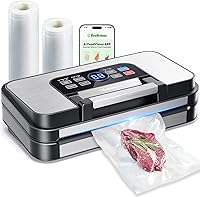
Best Vacuum Sealer for Home Use: Bars, Pumps and Modes
The best vacuum sealer for home use is the one whose seal bar, pump and modes match the food you seal most. For most kitchens, that means a double heat seal, a dry and moist setting and built-in roll storage.
On this page (14 sections)
- What a vacuum sealer does in a home kitchen
- Seal bars: width, double seals and bag fit
- Pumps and vacuum: reading kPa and watts
- Modes: dry, moist, pulse and gentle
- Roll storage, cutters and bag waste
- Counter size, weight and where the machine lives
- Four home machines, side by side
- Warranty, parts and upkeep
- Cleaning and gasket care
- External or chamber for home use
- How to use a home vacuum sealer well
- Is a vacuum sealer worth it for home use?
- Food safety with a home sealer
- Five questions before you buy a home sealer
A home vacuum sealer comes down to three specs that do most of the work: the seal bar, the pump and the modes. The rest, like the color, the lid and the included bags, matters far less once those three fit your food.
This guide explains each spec in plain words. It then shows how four machines we compared put those specs into practice, so you can read a product page and know what each number means for your kitchen.
If you only remember one thing, remember this: a machine with a double heat seal, a dry and moist setting and built-in roll storage covers most of what a home cook seals. The rest is a matter of counter space and how much control you want.
What a vacuum sealer does in a home kitchen
A vacuum sealer pulls air out of a bag, then fuses the bag closed with a heat strip. Less air around the food means slower freezer burn and slower spoilage.
Vacuum sealing doesn't kill bacteria or make food safe by itself. Keep sealed food cold, and treat the sealer as a packaging tool, not a safety step.
Many home machines are external sealers. You place the open end of a bag in the machine, the air is pulled out through that open end, and the bag is sealed.
Chamber machines work differently, and our what a chamber vacuum sealer is explains that.
Seal bars: width, double seals and bag fit
Best vacuum sealer for home use: which spec to check first
For home use, check the seal bar first, then the modes, then the pump. The bar decides which bags fit, the modes decide whether the machine suits your food, and the pump matters least once those two are right.
The seal bar is the strip that fuses the bag. Its length sets the widest bag the machine can close, so a longer bar suits bigger cuts.
Most home use is covered by a bar of about 8 to 11 in, and a 12 in bar gives you room for a large roast.
Look for a double heat seal if you can. A double seal lays down two lines of heat, so a weak spot on one line still has a backup.
Several of the machines below list a double seal in their specs.
Check the bar length against the bag you'll use, not the machine's footprint. A small machine can have a long bar, and a large machine can have a short one.
Pumps and vacuum: reading kPa and watts
Brands state pump power in two different ways, and the numbers don't compare directly. Watts measure the power the motor draws, so a higher wattage doesn't always mean a stronger vacuum.
Kilopascals (kPa) are closer to what you want, since they measure how far the vacuum pulls the pressure down. Many home sealers state 95 kPa, and several of the chamber machines in our other guides state up to 100 kPa.
Brands use their own language, so compare on the same basis. Nesco states its pump in watts, while Gasbye and Beelicious Pro state kPa.
We describe each figure as the brand's own.
Modes: dry, moist, pulse and gentle
The dry setting suits food with little moisture, like steaks, chops, bread and dry goods. The moist setting suits ground meat, marinated cuts and anything with juice, since liquid can reach the seal.
Pulse lets you pull air in short bursts, which helps with soft food. A gentle or lower-pressure setting does the same job with a slower pull.
Both help when a bag is soft or full of liquid.
Automatic detection is a feature on some home machines. The FoodSaver V4400 checks the bag and picks dry or moist mode on its own, which takes one choice off the list.
Modes matter more than the number of settings. Look for dry and moist at the least, and add pulse or gentle if you seal soft or wet food often.
Roll storage, cutters and bag waste
A built-in roll with a cutter lets you size each bag to the food. That saves film, since you aren't stuck with a fixed bag size for every cut.
Pre-cut bags skip the cutting step, which suits a freezer that gets the same portion sizes each week. Some machines take both, which is useful if you seal roasts and everyday portions.
Measure how much bag you'll use in a month before you choose a roll size. A household that seals one or two packs a week needs less roll than one that seals a big batch every month.
Our best vacuum sealer bags roundup covers the rolls and packs that fit home machines.
Counter size, weight and where the machine lives
Home sealers vary in size and weight. The Nesco VS-12 measures 15.75 by 8 by 4.5 in and weighs about 6 lb.
The FoodSaver FM2100 measures 16.3 by 9.2 by 4 in and weighs about 6.6 lb.
The Gasbye 95kPa measures 15.7 by 7.8 by 4.7 in and weighs about 6.5 lb. The V4400 is heavier, at 10 lb, so it's a permanent counter fixture.
Measure the counter, then the space above it for the lid to open. Also check the shelf or wall cabinet above, because a tall machine can block it.
Four home machines, side by side
These four cover a range of styles. Each one is a home external sealer, and each one shows a different mix of bar, pump and mode.
Chef Preserve is worth a note. It's a handheld-style unit that uses reusable bags and a rechargeable pump, so it works differently from a roll-based machine.
It suits small batches and travel better than a full household freezer load.
Our Chef Preserve vacuum sealer review covers that machine in more detail, and the Nesco VS-12 review covers the Nesco.
Warranty, parts and upkeep
Warranty terms differ from one brand to the next. FoodSaver says the FM2100 carries a 5-year limited warranty, Nesco gives the VS-12 1 year, and Gasbye says it offers replacement parts.
Check the parts question before you buy. A sealer used every week wears its gasket and seal strips sooner than one used once a month, so a replacement part you can buy matters over time.
Keep the receipt with the box, and read the warranty terms for what's covered. A short note in the cabinet with the model number helps if you need to claim.
Cleaning and gasket care
Wipe the drip tray and the seal area after each batch, once the machine is unplugged and cool. Juice that dries on the seal strip or the gasket can make the next seal less even.
Check the gasket for cracks or flattening every few months, and replace it when it looks worn. Some machines have a removable drip tray, which makes cleaning simpler.
Keep the manual with the machine, so you know which parts come out and which stay put.
External or chamber for home use
An external sealer suits dry food, bags of meat, bread and everyday portions. It's the usual choice for a home freezer, and it takes less counter space than most chamber machines.
A chamber sealer suits liquids, soups and marinades, since the whole bag sits inside the chamber and the liquid stays out of the pump. Chamber models are heavier, so they suit a permanent spot.
For commercial-style chamber models with wider bars, see the commercial vacuum sealer guide.
If you're unsure which type you need, read our food vacuum sealer pillar. For the machines that handle liquid, see the best chamber vacuum sealer roundup.
How to use a home vacuum sealer well
Start with a bag cut to the size of the food, and leave a clear margin at the open end. Lay the bag flat across the seal bar, with no wrinkles along the seal line.
Choose the mode before you press the button, unless the machine picks it for you. Match the mode to the food, and let the cycle finish before you open the lid.
Label each bag with the date and the cut. Freeze the bags flat until they're firm, then stack them.
For a step-by-step walkthrough, read how to use a vacuum sealer. If the machine won't seal, the vacuum sealer not sealing guide covers the common fixes.
Is a vacuum sealer worth it for home use?
Whether a sealer is worth it depends on how much food you freeze and how often you cook in batches. A household that buys meat in bulk or cooks ahead will get more from a sealer than one that seals a few bags a month.
Our is a vacuum sealer worth it guide works through that question. It helps you decide whether a home machine pays off for your kitchen.
Our best FoodSaver vacuum sealers roundup and the best vacuum sealers for meat roundup show scored picks for the external machines in this guide.
Food safety with a home sealer
Vacuum sealing is not a substitute for refrigeration or freezing. It removes air, which slows freezer burn and some spoilage, but it doesn't kill bacteria, and sealed low-acid food left at room temperature can grow the bacteria that cause botulism.
Keep sealed food refrigerated or frozen. The USDA's Food Safety and Inspection Service gives 0 F (-18 C) as the freezing target, per its freezing and food safety guidance.
Use a freezer thermometer to check the real temperature inside the freezer. The dial is a guide, and the thermometer shows what the food actually sees.
Five questions before you buy a home sealer
Work through these five questions, and the right machine usually becomes clear.
- What food do you seal most? Dry food and bread suit a basic dry and moist machine. Wet food and marinades suit a gentle setting or a chamber.
- How much counter space do you have? Measure the spot and the height above it, not just the footprint.
- Do you want to set the mode yourself? An automatic model takes one decision off the list, and a manual one gives you more control.
- Will you seal bulk cuts or portions? A long seal bar and a roll with a cutter fit bulk cuts, and pre-cut bags fit portions.
- What warranty and parts do you need? Read the terms and check how to get a replacement gasket or seal strip.
Pick the machine that answers those five questions well, and you'll rarely need more. That's the best vacuum sealer for home use for most kitchens, and it's the one that fits the food you already cook.