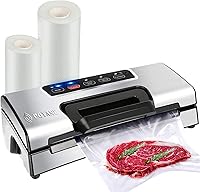
Dry or Moist Setting: Vacuum Sealing Meat
When you vacuum seal meat, use the moist setting for juicy cuts and the dry setting for meat you've patted dry. Moist modes change how the machine pulls air and seals, so juice is less likely to get drawn into the pump.
On this page (10 sections)
- Vacuum seal meat on the dry or moist setting
- When to use the moist setting
- When to use the dry setting
- Pat dry or freeze first
- Beelicious Pro's 95kPa sealer
- Meat safety in the bag
- Which setting for common cuts
- Why juice matters in the bag
- Mistakes that cause weak seals on meat
- Vacuum seal meat dry or moist: pick a setting and check the seal
Use the moist setting for meat that has juice or marinade, and the dry setting for meat you've patted dry. Moist modes change how the machine pulls air and seals, so juice is less likely to get drawn into the pump.
Most home sealers have both settings, and some add a gentle or pulse option. The right choice depends on how wet the meat is when it goes in the bag.
This guide explains how the two settings differ, which cuts suit each one, and how to avoid a weak seal on juicy meat.
Vacuum seal meat on the dry or moist setting
A dry setting pulls air at full strength and seals once the air is out. It works well on meat with little juice, since there's not much liquid to pull toward the pump.
A moist setting changes that process. Most machines change the pull or add a short pause before sealing, so liquid stays out of the pump and the seam forms cleanly.
Each brand sets its own vacuum strength and seal time, so the settings differ from machine to machine.
When to use the moist setting
Use the moist setting for juicy cuts, marinated meat and ground meat that's still wet. It's also the setting for wet fish and poultry that's been rinsed and not yet dried.
Vacuum seal meat that's juicy or marinated
FoodSaver's FM2100 has dry and moist food modes, along with a roll cutter and an accessory port. FoodSaver says the machine suits sous vide cooking too, which is a good fit if you cook meat that way.
MegaWise's updated machine has a moist mode that MegaWise says removes liquid from meat or fish. It includes a pulse function, so you can control how much vacuum the bag gets as it seals.
When to use the dry setting
Use the dry setting for meat that's already dry, such as a steak patted dry with a towel or a cut that's been air-dried in the fridge. Dry foods also include jerky and cured meat.
Let cooked meat cool before you seal it, so steam doesn't fog the bag or wet the seal area, then refrigerate or freeze the pack soon after.
Pat dry or freeze first
A few minutes with a paper towel cuts down on juice in the bag. Pat the surface of each cut dry, then seal it on the dry setting if your machine has one.
Freezing wet cuts first is another option. Freeze the meat on a tray until firm, then seal it on the moist or dry setting.
Frozen meat holds its shape and doesn't release juice into the seal zone.
Keep the seal area clean. A smear of fat or juice on the bar can keep the bag from sealing.
Beelicious Pro's 95kPa sealer
Beelicious Pro's 95kPa sealer has dry, moist and extra-moist food modes, with normal and gentle pressure settings. The gentle setting helps with soft foods that can crush under a strong pull.
Beelicious Pro also includes a 12 mm wide seal bar for a larger seam. Use it when you pack wet cuts and want a wide seal to hold.
Meat safety in the bag
Vacuum sealing is not a substitute for refrigeration or freezing. Raw meat still needs to stay cold, so keep it in the fridge until you seal it, and don't leave sealed bags out on the counter.
For long storage, freeze the meat at 0 F (-18 C) or colder. The USDA's Food Safety and Inspection Service gives that freezer target, and its freezing and food safety guidance explains the basics.
Thaw sealed meat in the fridge, not on the counter. Once it's thawed, cook it within the time USDA guidance gives for that cut.
Take fish out of the sealed bag before you thaw it, since fish in a low-oxygen bag is a botulism concern as it warms. Sealing jerky or cured sausage doesn't make it shelf stable either, because only proper drying or curing does that.
Which setting for common cuts
Use moist for a juicy steak, marinated chicken, ground beef with fat, or a wet fish fillet. These cuts give off liquid, so the moist setting protects the seal.
Use dry for a patted-dry roast, a cooled cooked roast, jerky or a cured sausage. These cuts have little free liquid, so the dry setting works.
If a cut sits between the two, freeze it first. Freezing firms the meat and cuts the juice that reaches the seal.
Why juice matters in the bag
Juice gets in the way of a clean seal. Liquid in the seal zone keeps the bar from fusing the layers together, and it can draw toward the pump.
Fat works the same way. A smear of fat on the bar or the bag edge can stop the seal from forming, so wipe the edge before you close the lid.
Mistakes that cause weak seals on meat
Overfilling is the most common mistake. Leave a clear strip at the open end so the bar has a clean place to seal.
Cutting the bag too short is another. The seal needs room to form, so cut each bag with a little extra length.
Vacuum seal meat dry or moist: pick a setting and check the seal
Pick moist whenever the meat is wet or marinated, and dry when you've patted it dry. Check each seal by pressing the seam, and reseal any bag that looks loose.
For a machine built around game and meat, the best vacuum sealer for hunters compares the models with the right modes. If you're sealing a deer harvest in particular, vacuum sealer for deer meat covers the prep steps.
The best vacuum sealers for meat lists the machines with dry and moist settings. For bag choices, textured side up or down explains how bag texture affects the seal.
Frequently asked questions
Should I use the moist or dry setting for raw meat?
Use moist for raw meat with visible juice, such as a marinated steak or ground meat. Use dry for meat you've patted dry, and if you're unsure, pat it dry and use the dry setting.
Can I vacuum seal wet meat on the dry setting?
You can, but juice is more likely to reach the pump and leave a weak seal. Pat the meat dry or freeze it first, or switch to the moist setting if your machine has one.
What does the moist setting actually do?
Each machine sets its own vacuum strength and seal time. Moist modes usually change the pull or add a pause so liquid stays out of the pump, then seal longer for a tight seam.
Is vacuum sealed meat safe at room temperature?
No, vacuum sealing slows spoilage but raw meat still needs to stay cold. Keep it in the fridge or freezer, and freeze it at 0 F (-18 C) or colder for long storage.